
17th October 2024 at Ålesund Airport Vigra, Norway’s Chief of Defence, Eirik Kristoffersen, Per Arne Johnsen from Forsvarsmateriel, ST1’s CEO Henrikkie Talvitie and Norwgian’s CEO, Geir Karlsen showcased a voluntary carbon reduction initiative taking 18 months in the making to develop, at this in-person aircraft fuelling with SAF, a non-fossil based aviation fuel.
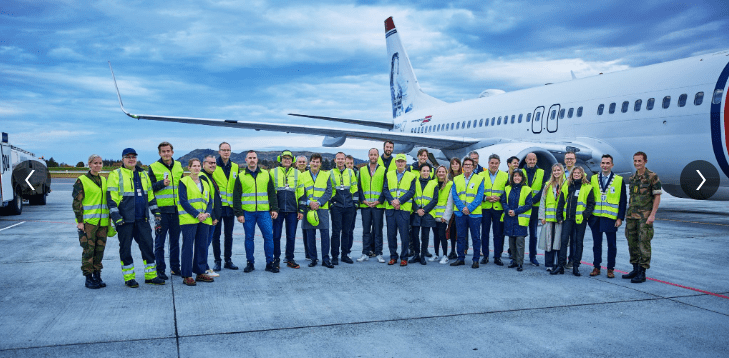
The event commemorated the first delivery of SAF in this new SAF buying approach, the teams involved all strong supporters of this carbon reduction initiative for their respective organisations.
The SAF supplier ST1 used feedstock from their acquired Brocklesby, UK, waste recycling plant, which recycles used cooking oil from the likes of fish and chips, a UK favourite. ST1 is privately owned SAF producer working with Norwegian and the Armed Forces to supply the SAF for this contract.
Fly Green Allinace’s CEO, Sarah Wilkin, pictured above, was invited to attend the demonstration event, to watch the SAF being “dropped in” to the tanks of the Boeing 737 800 in-person. This was a rare opportunity to watch the plane be refuelled in this way and for the team to know they were certainly flying on the SAF that was purchased. As is usual with SAF, it is bought and added to the supply at an airport which often means you would never know if the SAF was on the plane you were flying on, as currently there is no system to track this. The whole team then flew for 45 minute back to Oslo on the 15% SAF blend, a route that takes 8 hours by car.
SAF is blended with aviation fuel (Jet A-1) and can be added into any current aircraft engine and is ASTM tested meaning it meets the global safety requirements and can be blended up to 50% with standard jet fuel to reduce emissions by up to 80% on the life cycle. SAF or non-fossil based fuel is made from waste materials and now can also be made from carbon capture and hydrogen making an eSAF or eFuel. SAF is usually accompanied by a certificate of sustainability from the supplier and must meet either ISCC or RSB standards to be deemed a true lower carbon fuel and be counted as ethically sourced. The SAF is a scope 1 reduction for Norwegian airline and a scope 3 reduction for Norwegian Armed Forces travel. The mechanism for accounting for carbon has been developing over the last 3 years and can be a complex topic to navigate.

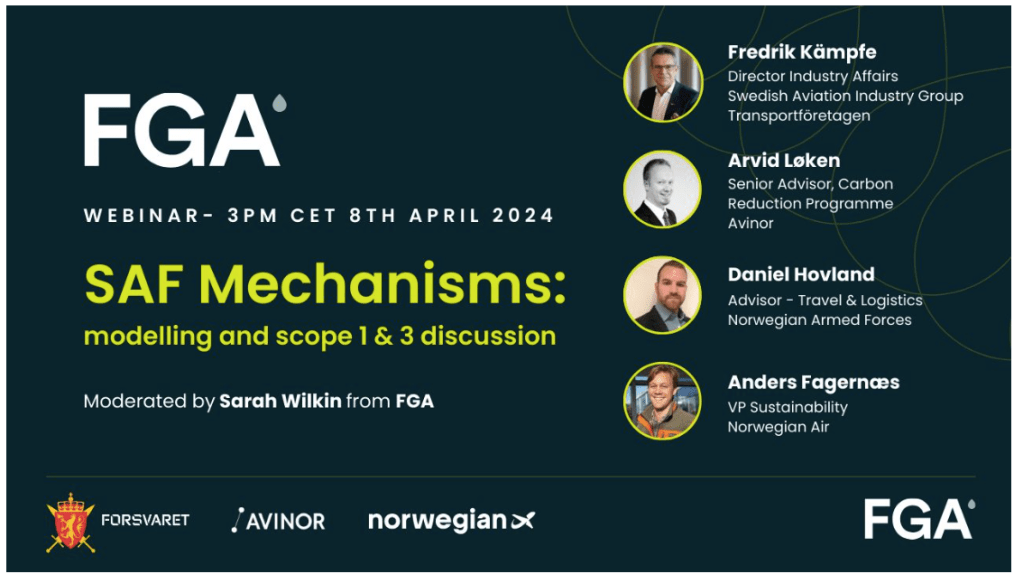
FGA has had a supporting role in disseminating the contracting approach and mechanism to support further forms of SAF aggregation in FGA’s role as market makers, and took the “SAF mechanism” to panel in April based off a request to find new mechanisms for a V2 of an FGA white paper made in 2022 called “SAF Mechanism” which the Armed Forces responded to. The report which was made to support the market and understanding of the SAF tech itself, was discussed in the webinar with the team from Norwegian and the Armed Forces, the airport group Avinor and the Director of Aviation at the Swedish Transport Group. This Norwegian approach opens up a new category/type of mechanism and is a welcome addition. You can watch the webinar by logging into FGA Knowledge Hub and read the attendee feedback on the approach here.
Norway has one of the largest coastlines in the world due to the complex geographical spread of fjords and islands, is a mountain region and reaching the most Easterly parts is a 2.5 hour flight, so air travel is key to connection in the country.
As a nation, Norway, is mostly powered by hydro and now with the Norwegian government weighting procurement decisions 30% on sustainability, it means it is mandated to decarbonise all procured services. The new procurement legislation came in January 2024, after this partnership was agreed, meaning this Norwegian and Norwegian Armed Forces approach to buying SAF was a voluntary commitment, giving a leading example to other travel buyers showing it is possible to make such a purchase a business-as-usual approach to decarbonising air travel. All organisation discussed it is important to lead the way on decarbonisation which is why this approach was signed off by the Chief of Defence and Minster of Environment who are encouraging dissemination and discussion for further commitments in Norway and beyond. This enabled Fly Green Alliance to support this approach to be discussed which all groups hoped would ensure more SAF purchases /offtakes came to frution in the future, which supports the market to grow, more investments in production, and in turn carbon reduction to accelerate for aviation.
Fly Green Alliance was also able to discuss the Norwegian SAF mechanism at World eFuel Summit in Amsterdam 9th October because the Norwegian and Norwegian Armed Forces contracted approach is open to the SAF being an eFuel and also can include electrified flight, in case this tech is able to replace any of the aviation fuelled flights in the future. This also meant that the legal approach includes future focused flexible terms meaning investors and airlines find the approach a manageable risk. A next step for all involved is to now aggregate these types of contracts /buying approach across business travel. Contact the FGA or Norwegian team to discuss the details of this approach.
Do you need SAF and carbon accounting consultancy? Or sustainability communication expertise? Contact: sarah@flygreenalliance.org and read about FGA’s work: https://flygreenalliance.org/industry-work/
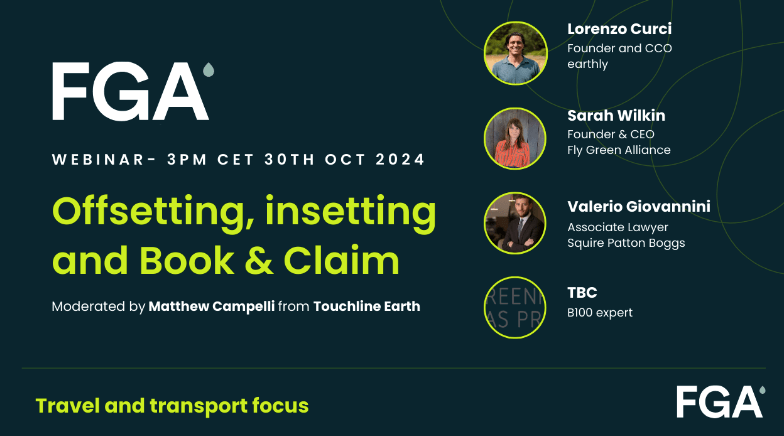
And join FGA’s latest webinar discussing carbon accounting methods and how SAF and other fuels are supporting decarbonisation of travel and transport.


 Fly Green Alliance (FGA) - sustainable aviation fuel (SAF), thought leaders, travel & transport, fuels, multi modal, SAF
Leave a comment